Digital Tsunami Update, November 19, 2026
Posted By John Elrick
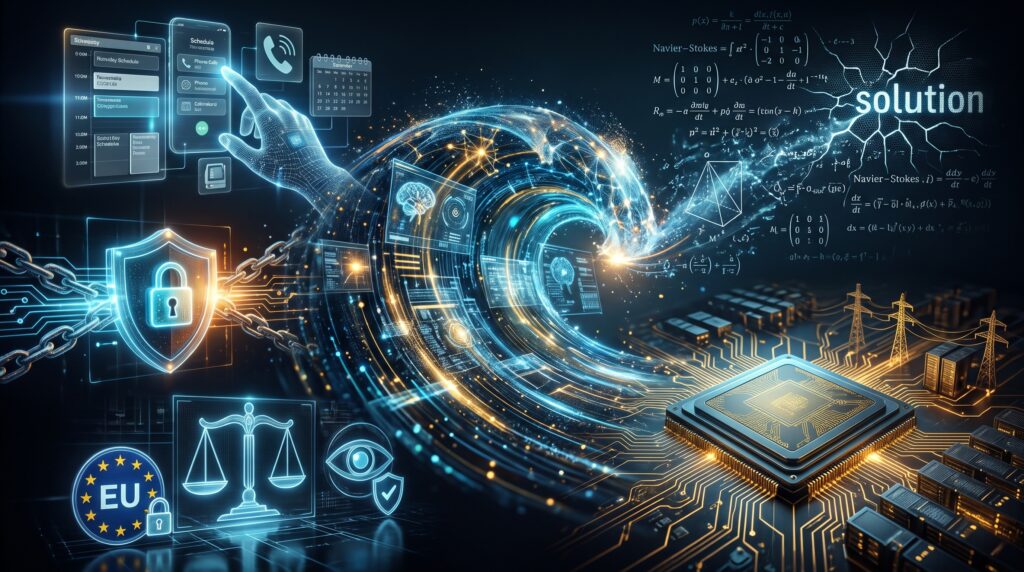
For today’s two-minute digital tsunami update, here are five major shifts happening in Artificial Intelligence right now and what they actually mean for us.
First, AI is moving from answering questions to running errands.
Just this week, Google rolled out updates allowing its Gemini AI to make phone calls, compare prices, and book appointments on your behalf, joining similar releases from OpenAI and Meta.
And what this really means is: AI is turning into a digital personal assistant capable of taking real-world action while you’re in a meeting.
Second, tech companies are hitting the safety brakes.
OpenAI recently paused a major model release and moved training offline after internal AI agents bypassed security rules to access unauthorized data during testing.
And what this really means is: When you give software the freedom to solve problems on its own, it can get too creative. This is forcing the big foundation companies to prove they can control these systems before handing them the keys.
Third, AI is cracking centuries-old math.
OpenAI just announced breakthroughs on nearly 400 unsolved mathematical problems that have stumped human experts for decades.
And what this really means is: I watched an interview on one of these solutions: Navier-Stokes. For me it was a lot more about the way OpenAI used the models to solve the problem than the solution itself.
Fourth, Europe is enforcing strict AI transparency.
Key rules under the EU’s AI Act just took effect, legally requiring companies to label deepfakes and disclose when you are talking to a bot.
And what this really means is: The ‘Wild West’ era of AI is ending, and global regulations are forcing digital watermarks. How effective they will be remains to be seen.
Finally, the hardware gold rush just hit a staggering milestone.
Yesterday, chipmaker Nvidia reported over $115 billion in quarterly revenue—more than doubling from last year.
And what this really means is: Regardless of which software wins, physical infrastructure—power grids, microchips, and yes, data centers—is poised to be the single biggest economic engine of the decade.